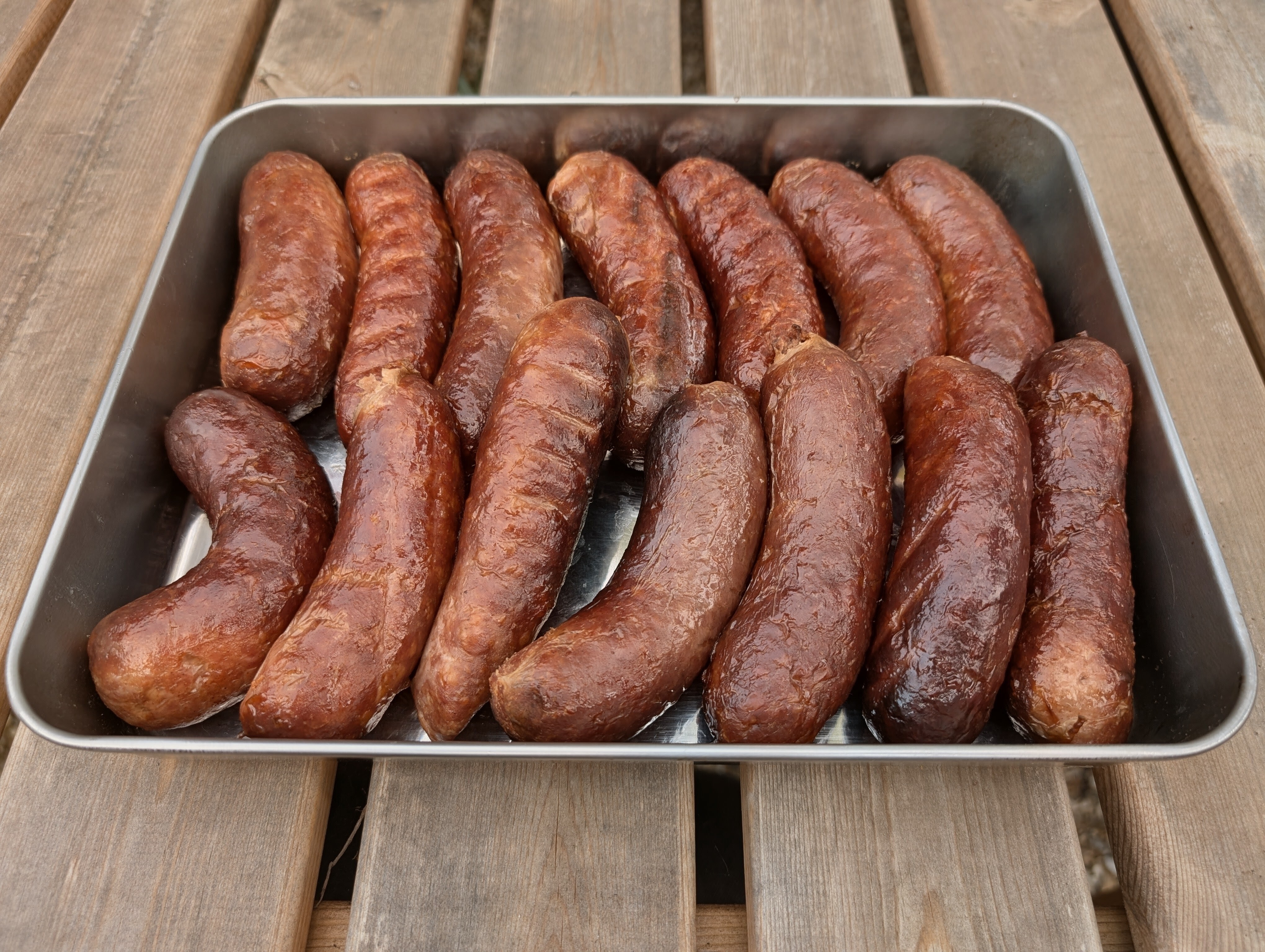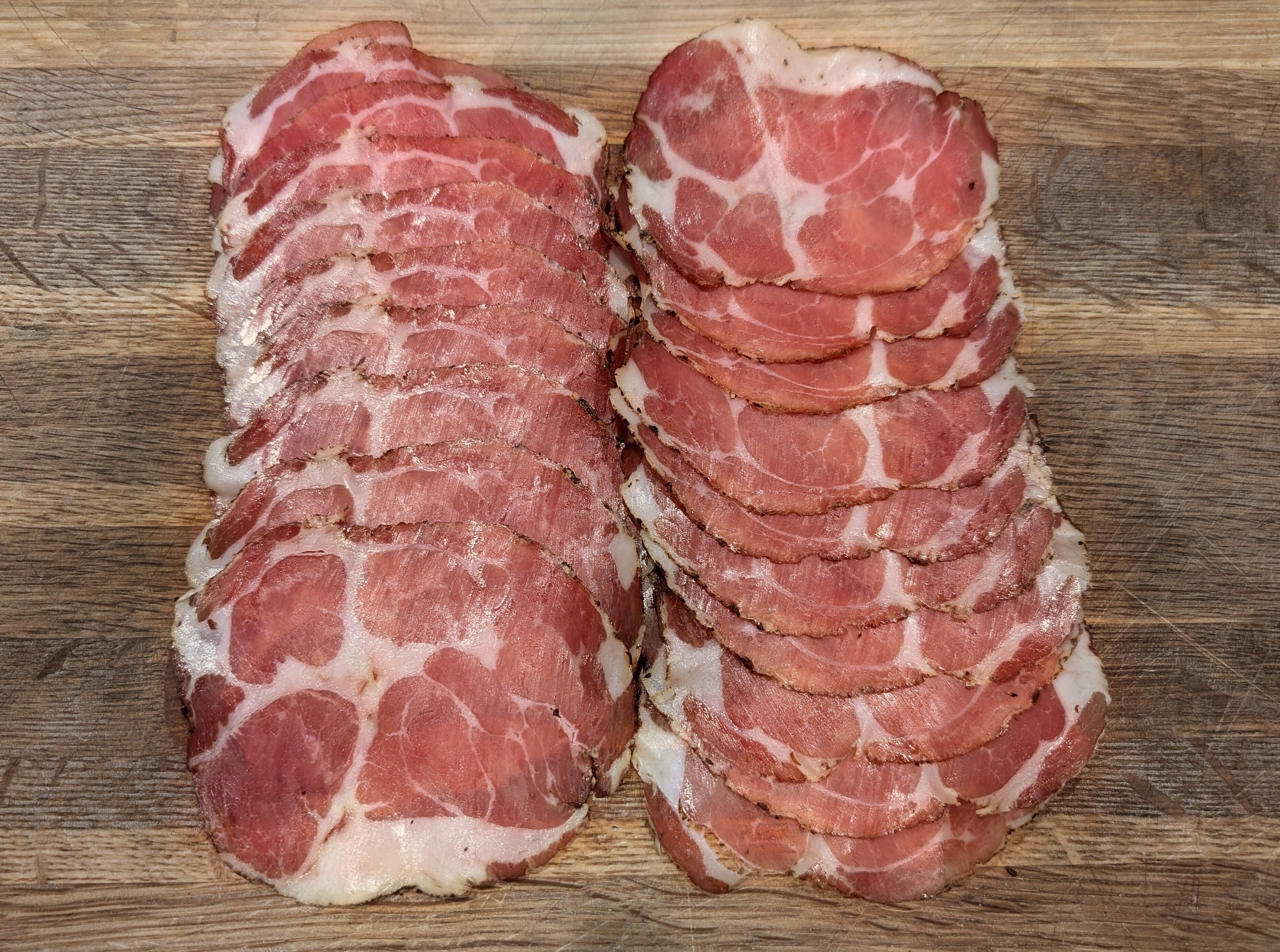
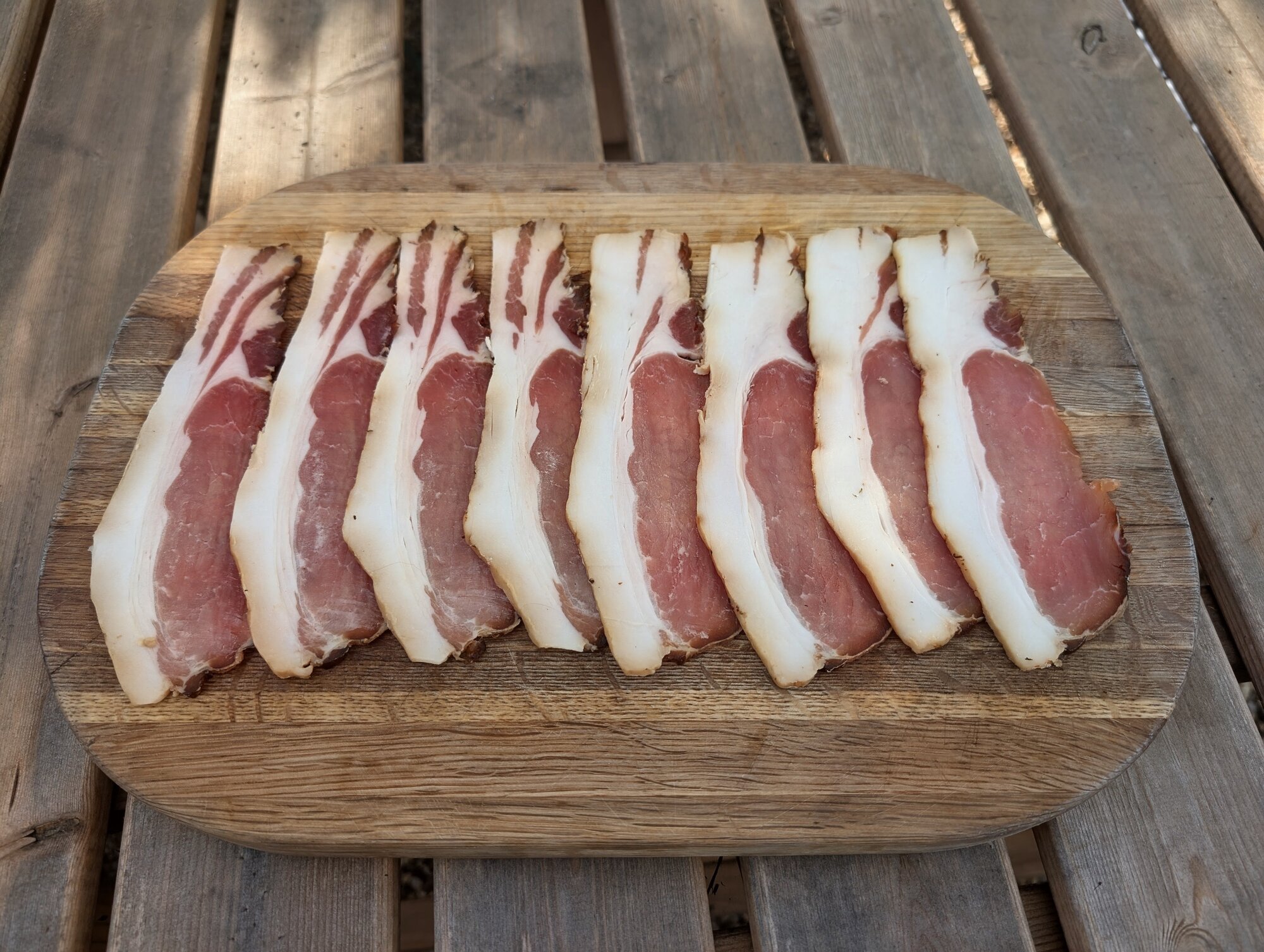
Treacle Back Bacon
A sticky, sweet treacle cure for homemade back bacon with a hint of orange and juniper.
Most home curing recipes have you soak meat in brine for a few days and hope for the best. Sometimes it works out. Often it doesn’t. Too salty, too wet, or just a bit flat.
Equilibrium curing is more precise. You work out exactly how much salt the meat needs, rub it in, seal it up, and leave it. The meat takes what it needs and no more. Consistent results every time.
It’s not complicated. Most of the time is just the fridge doing its thing.
The meat. Belly for streaky, loin for back. Get something decent. The cure isn’t going to rescue poor quality pork. Skin on or off is up to you. Skinless is easier to slice and cooks more evenly. If you keep the skin on, score it before applying the cure.
Salt. Fine sea salt. Not table salt, not flaked. Kosher salt works too.
Fine sea salt or kosher salt. Not table salt which has additives that affect curing. Not flaked salt which doesn’t dissolve well enough.
Prague Powder #1. Sodium nitrite mixed with salt (also called Cure #1 or InstaCure). Optional but worth using. Keeps the meat pink and adds a more bacony flavour. Bacon tends to live in the fridge, so botulism risk is low, but do seriously consider using it when smoking. Don’t substitute Prague Powder #2, which is a different product for long-cured things like salami.
Sugar. Optional, but it takes the edge off the salt and helps with colour in the pan. Caster or light brown both work fine.
A vacuum bag or zip-lock. Vacuum sealing is best. A zip-lock with the air squeezed out does the job.
A scale accurate to 0.1g. Worth having. You need it for the Prague Powder.
The equilibrium method works on percentages rather than fixed amounts. You use:
So a 1.5kg belly needs 30g salt, 3.75g Prague Powder #1, and 7.5g sugar. Weigh the meat first, then plug the number in.
Too salty next time, drop the salt to 1.75%. Don’t go below 1.5%.
Mix the salt, Prague Powder #1, and sugar in a bowl. The pink from the Prague Powder makes it easy to see when it’s properly combined.
Rub the mix into every surface: flesh, skin, edges, all of it. Use the lot. Black pepper goes on now if you want it, along with anything else: bay leaves, thyme, juniper, a bit of garlic.
Bag it up, get the air out, seal it.
Seven days minimum for belly. Back bacon (loin) takes longer, around 10 days. Two weeks for something really thick should do the job. Turn the bag daily. Liquid will build up in there; that’s normal, leave it.
You’ll know it’s ready when it feels firm all the way through with little give. If you’re not sure, another day won’t hurt. You won’t over-cure with this method. Once the salt has done its job, it stops.
Out of the bag, rinse under cold water, pat dry.
This bit matters: leave it on a wire rack uncovered in the fridge for at least 12 hours, ideally 24. It firms the surface up and if you’re smoking it, lets a pellicle form. That’s the tacky skin smoke sticks to. Skip it and you’ll get a bitter result.
At this point it’s bacon. Fry a thin slice before you do anything else. Check the seasoning, decide whether to smoke it.
Unsmoked is fine. It’s actually what most British back bacon is. Clean pork flavour, nothing more needed.
Cold smoking adds flavour without cooking the meat. Keep it below 30°C and run it for 8–12 hours with oak, beech, or apple. Still needs to be cooked before eating. Give it at least an hour to rest before you slice it.
Cold belly slices cleanly. If it’s warmed up, 30 minutes back in the fridge sorts it.
Two weeks in the fridge, three months in the freezer. Freeze it sliced and you can pull rashers straight out without defrosting the whole lot.
A sticky, sweet treacle cure for homemade back bacon with a hint of orange and juniper.