The collar
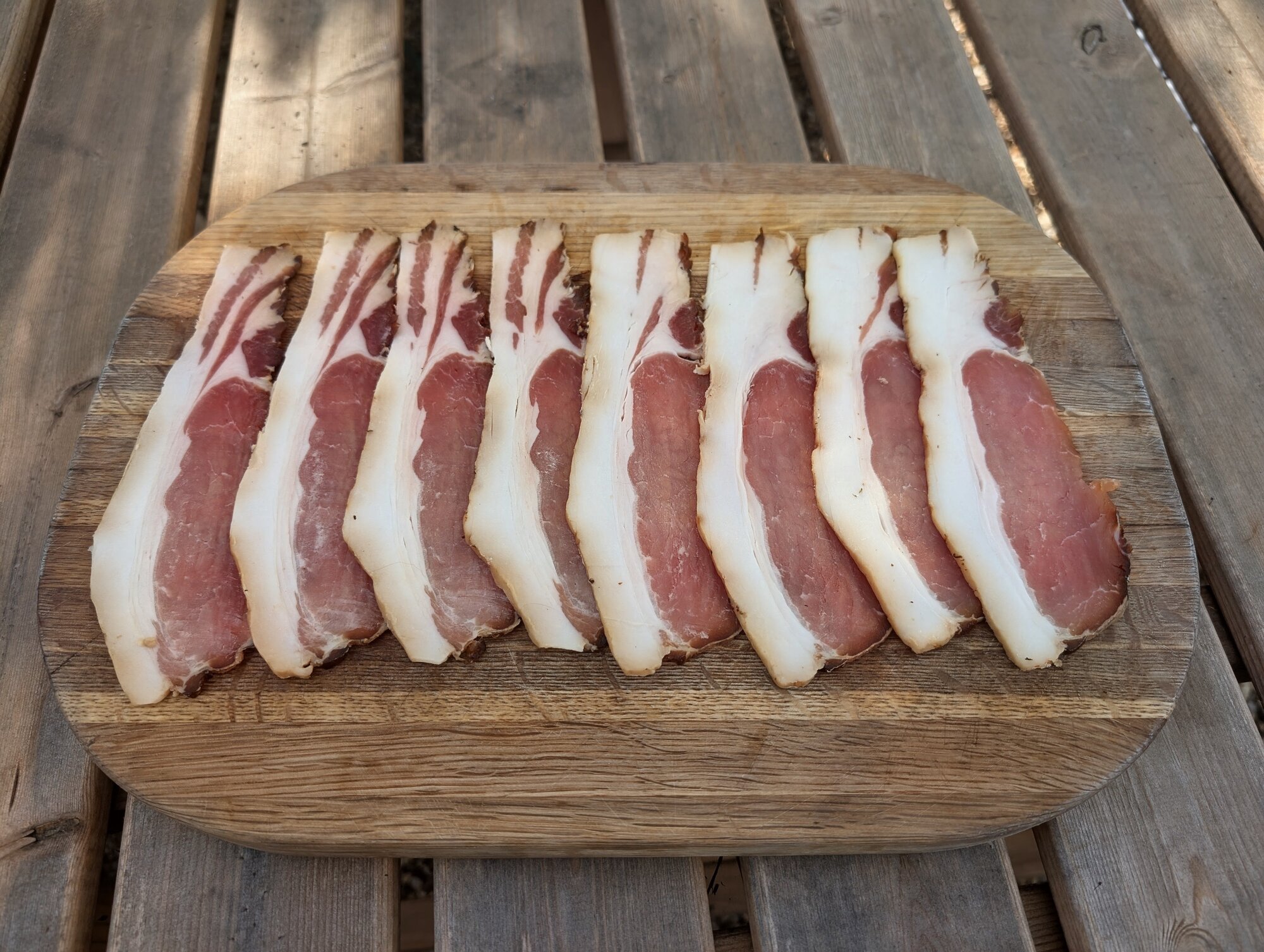
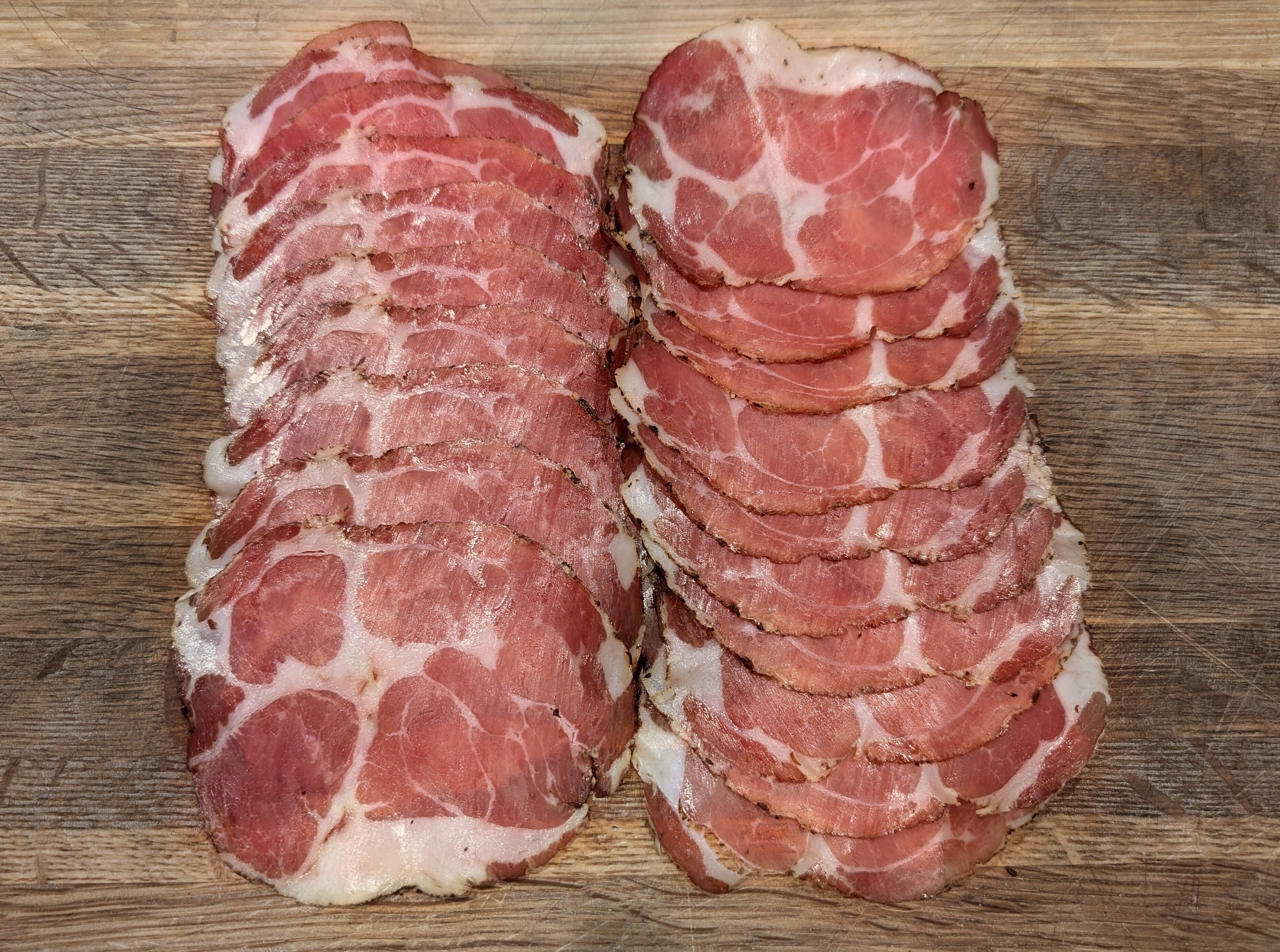
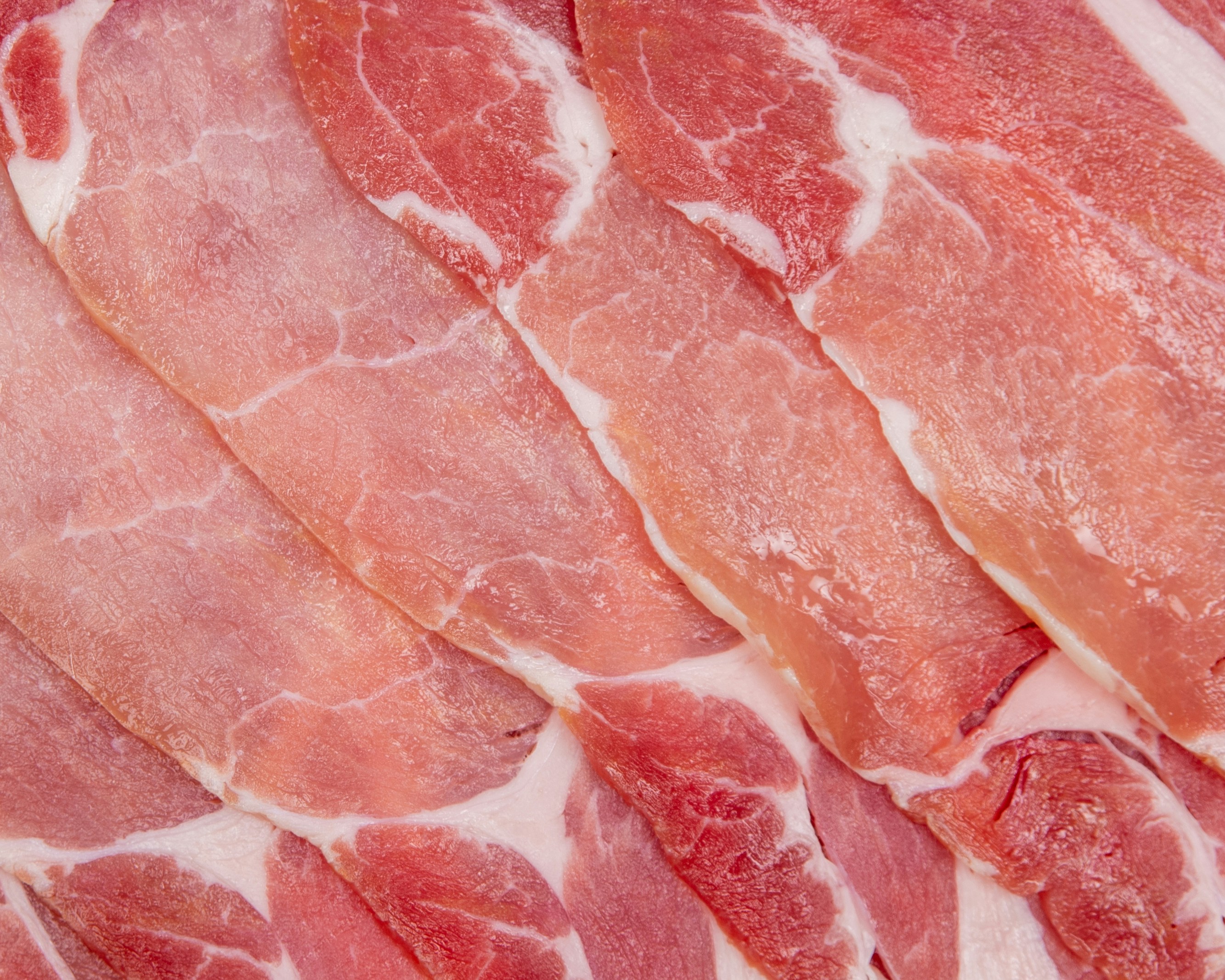
The cut you want is pork collar, sometimes labelled neck fillet. It runs from the base of the skull to roughly the fourth or fifth rib. Well-marbled, with fat running through rather than sitting in a cap. Every slice melts.
Curing salts
For whole-muscle projects hung without a casing you can skip curing salts entirely, as the intact muscle surface provides a barrier. If you are stuffing into an ox bung and hanging for three months or more, Prague Powder #2 is worth using. It contains both sodium nitrite and sodium nitrate, the nitrate acting as a slow-release reservoir throughout a long anaerobic cure.
Casing
Stuffing into an ox bung is optional but worth doing. It slows moisture loss from the outside so the coppa dries evenly rather than forming a hard outer crust, and holds the round shape. Soak it in warm water overnight before use. If you want something easier to work with, dry-aging collagen sheets do the same job. They lack the romance of a proper bung, mind you.
Mold 600
Before hanging, you can spray or brush a small amount of Mold 600 dissolved in water onto the outside of the casing. It establishes a controlled white Penicillium bloom that crowds out unwanted moulds and contributes to flavour. Useful if your curing space is new or has had mould problems before.
Equipment
You will need a scale accurate to 0.1g, a vacuum sealer or zip-lock bags, and butcher’s twine. For hanging you need somewhere at 10 to 13C with 70 to 80% humidity for ten to fourteen weeks. A wine fridge with a small dish of water works. A dedicated curing chamber gives more control and is easier to build than you’d think.
Recipe: Spicy Fennel Coppa
A whole-muscle dry-cured coppa with fennel, chili, and smoked paprika.
Coppa comes from the neck of the pig, the same cut sold as capicola or capocollo in Italian delis. Fennel, chili, and hot smoked paprika. Most of the time is just the fridge doing its thing.
Ingredients
Pork collar (neck muscle)
1000g
Fine sea salt
27.5g
Caster sugar
2.5g
Prague Powder #2 (optional, see notes)
2.5g
Fennel seeds (for cure rub)
4g
Hot smoked paprika (for cure rub)
2g
Dried chili flakes (for cure rub)
2.5g
Black pepper, coarsely cracked (for cure rub)
2g
Garlic powder (for cure rub)
1g
Dried oregano (for cure rub)
1g
Fennel seeds (for outer coating)
3g
Hot smoked paprika (for outer coating)
1g
Dried chili flakes (for outer coating)
2g
Black pepper, coarsely cracked (for outer coating)
2g
Ox bung cap (optional, see notes)
1
Instructions
Prepare the Cure
- Toast the fennel seeds in a dry pan for a minute or two until fragrant. Tip onto a board and crush coarsely with a rolling pin or mortar and pestle. You want cracked seeds, not powder.
- Mix the crushed fennel with the paprika, chili flakes, cracked pepper, garlic powder, and oregano.
- Add the salt, sugar, and Prague Powder #2 (if using) and mix until combined.
Apply the Cure
- Trim the collar of any loose pieces and glands. Glands are waxy, slightly darker lumps; remove them as they taste bitter.
- Pat the meat completely dry with kitchen paper.
- Apply the cure mix to every surface. All faces, edges, any crevices. Rub it in firmly. Use all of it.
- Vacuum seal or place in a zip-lock with as much air removed as possible. Label with the date and the raw weight.
- Refrigerate for 14 days, turning the bag once a day. Liquid will accumulate in the bag. Leave it.
- After 14 days, press the meat through the bag. It should feel firm with no soft spots. If in doubt, give it another few days.
Rinse and Coat
- Remove from the bag, rinse under cold water, and pat completely dry.
- Toast the remaining fennel seeds and crush coarsely. Mix with the outer coating paprika, chili flakes, and cracked pepper.
- Press the coating firmly onto every surface. It should stick to the damp exterior.
Case and Truss (optional)
- Soak the ox bung in warm water for at least 30 minutes to soften it (but ideally over night).
- Work the coated collar into the bung. Ease it in gradually until it is fully enclosed with no air pockets.
- Tie both ends tightly with butcher's twine. Run additional loops along the length to compress the meat into an even cylinder.
- Prick the casing several times with a sterilised needle to release any trapped air.
Hang and Monitor
- Weigh the cased coppa and record the hanging weight and date on a label tied to the string.
- Hang at 10–13°C with 70–80% humidity.
- Check weekly. White surface mould is fine. Wipe it off if you prefer with a cloth dampened in white wine vinegar. Remove any unwelcome mould immediately with the same.
- Watch for case hardening. A very firm outer surface with a soft interior means the humidity is too low. Increase it and consider wrapping the coppa loosely in muslin for a few days.
- The coppa is ready when it has lost 30% of its hanging weight. For a 1kg piece that means down to roughly 700g. Ten to fourteen weeks minimum.
Slice and Serve
- Cut off one end and check. The fat should be white and almost translucent, the lean deep red-pink with no grey.
- Slice as thin as you can. A mandoline or meat slicer is ideal. At paper-thin slices the fat becomes almost translucent and the texture is something else.
- Serve with good bread. A glass of something cold.
Notes
- Weight matters more than time. At 30% loss the texture is firm but yielding. At 35% it is drier and more intense. Weigh it weekly.
- A small fan on its lowest setting improves airflow, keeps drying even, and helps prevent surface mould.
![Mat]()
Mat
Software engineer, cyclist, vegetable grower, and cook from Sussex.